How AEO Analyzers Works: The 90-Second Tour of a Hundred-Hour Analysis
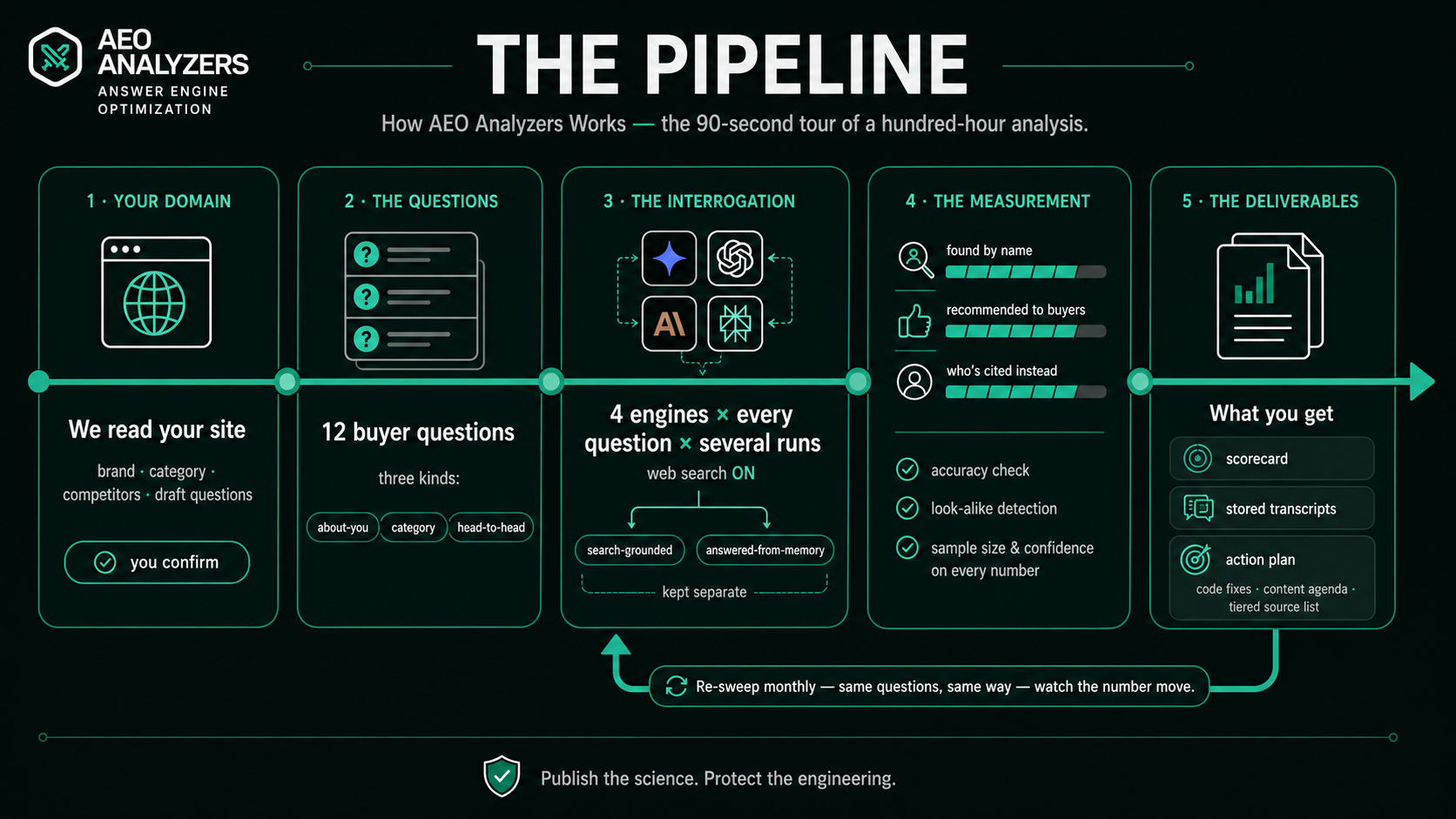
Most AI-visibility tools hand you a number and a vibe. This one shows its work — every question it asked, every engine it asked, every answer it got back, stored so you can re-run it yourself. Here is the whole pipeline, end to end, in about the time it takes to read this page.
What a web team would spend a hundred hours reasoning through by hand — which questions your buyers ask AI, which engines answer them, who gets named — the analysis works through in about ninety seconds, and then leaves the receipts.
Stage 1–2 — we read your site, then form the questions
You give a domain. We read the live page and propose your brand, your category, your closest competitors, and a set of buyer questions — and you confirm or edit every field before anything runs. The instrument starts from what is actually on your page, not a guess about it.
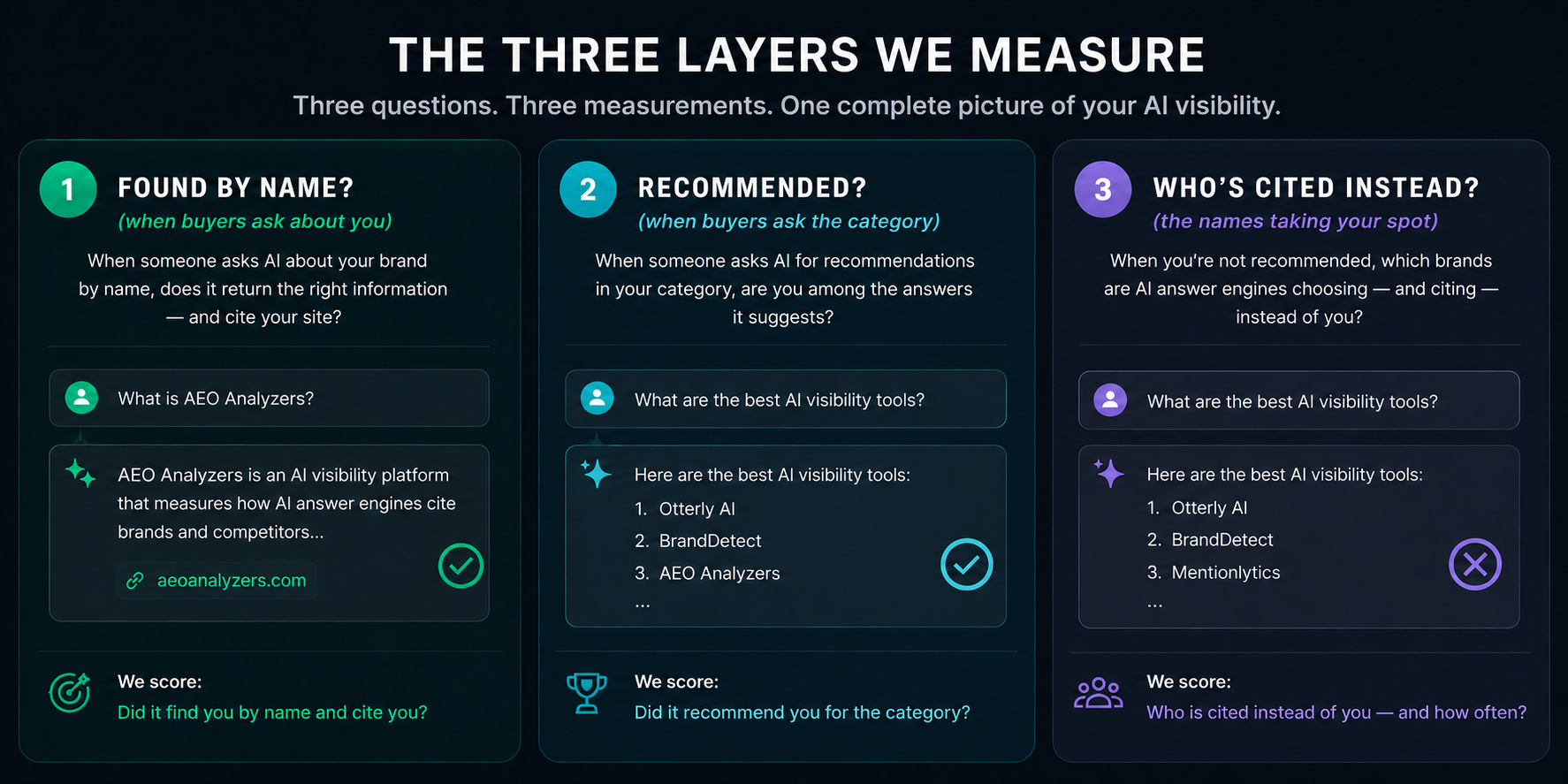
Then the questions: twelve a real buyer would type, in three kinds. About you — are you found when named. Category — are you recommended when nobody names you. Head-to-head — the alternatives-and-versus questions. These are the questions your buyers ask AI before they ever reach your site.
Stage 3 — the interrogation
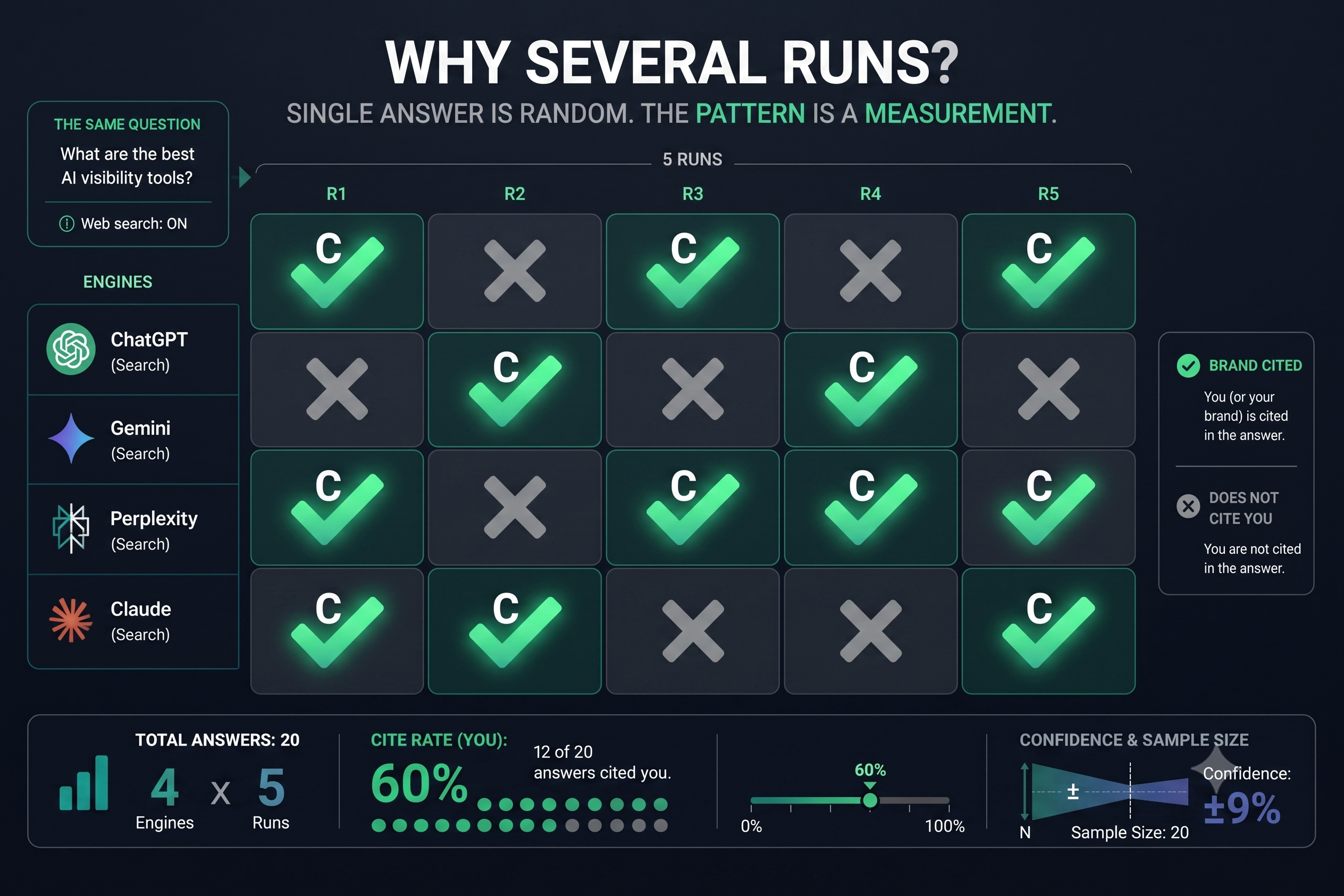
Every question goes to four answer engines — ChatGPT, Claude, Perplexity, and Gemini — with web search on, several times each. Why several? Because an AI answer changes from run to run: one answer is an anecdote; the pattern across runs is a measurement. And we separate answers the engine actually searched the web to produce from answers it gave from memory — they mean different things, so they are scored separately, never blended.
Stage 4 — the measurement
Every answer is scored on the three separable layers above, plus an accuracy check — did the engine get your facts right? — and a look-alike check: is it confusing you with a similarly named company, a colliding stock ticker, a different site? Every number ships with how many times we asked and how confident that makes the result. No bare figures, no certainty theatre.
Why "read" and "cited" are different numbers
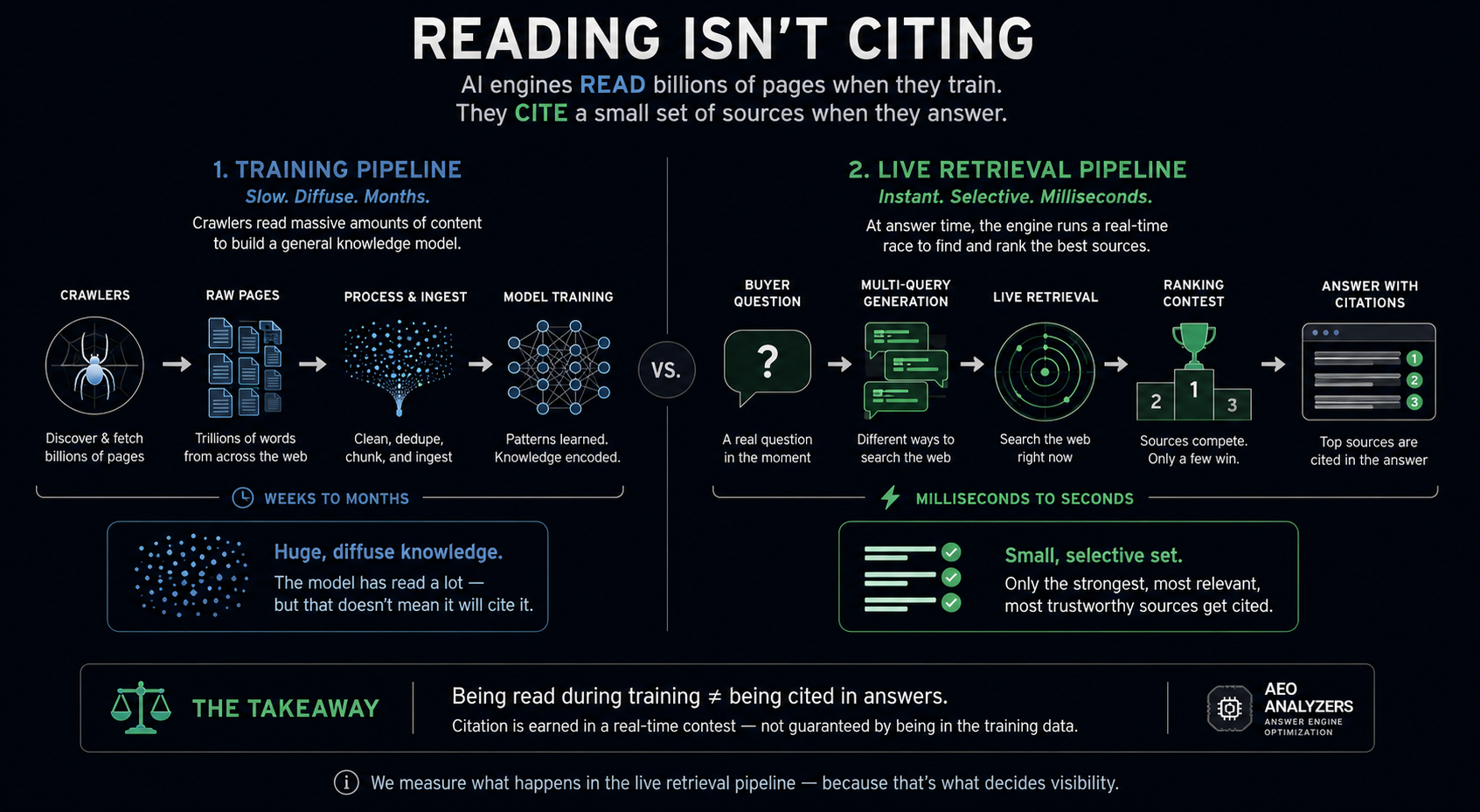
Here is the finding that reshaped how we think about this. In the thirty days to July 31, AI crawlers visited our own site 265 times. They had read everything. On the buyer questions that matter, they recommended us zero times. Being read is not being cited — and the two live on different pipelines, on different clocks.
Stage 5 — the deliverables
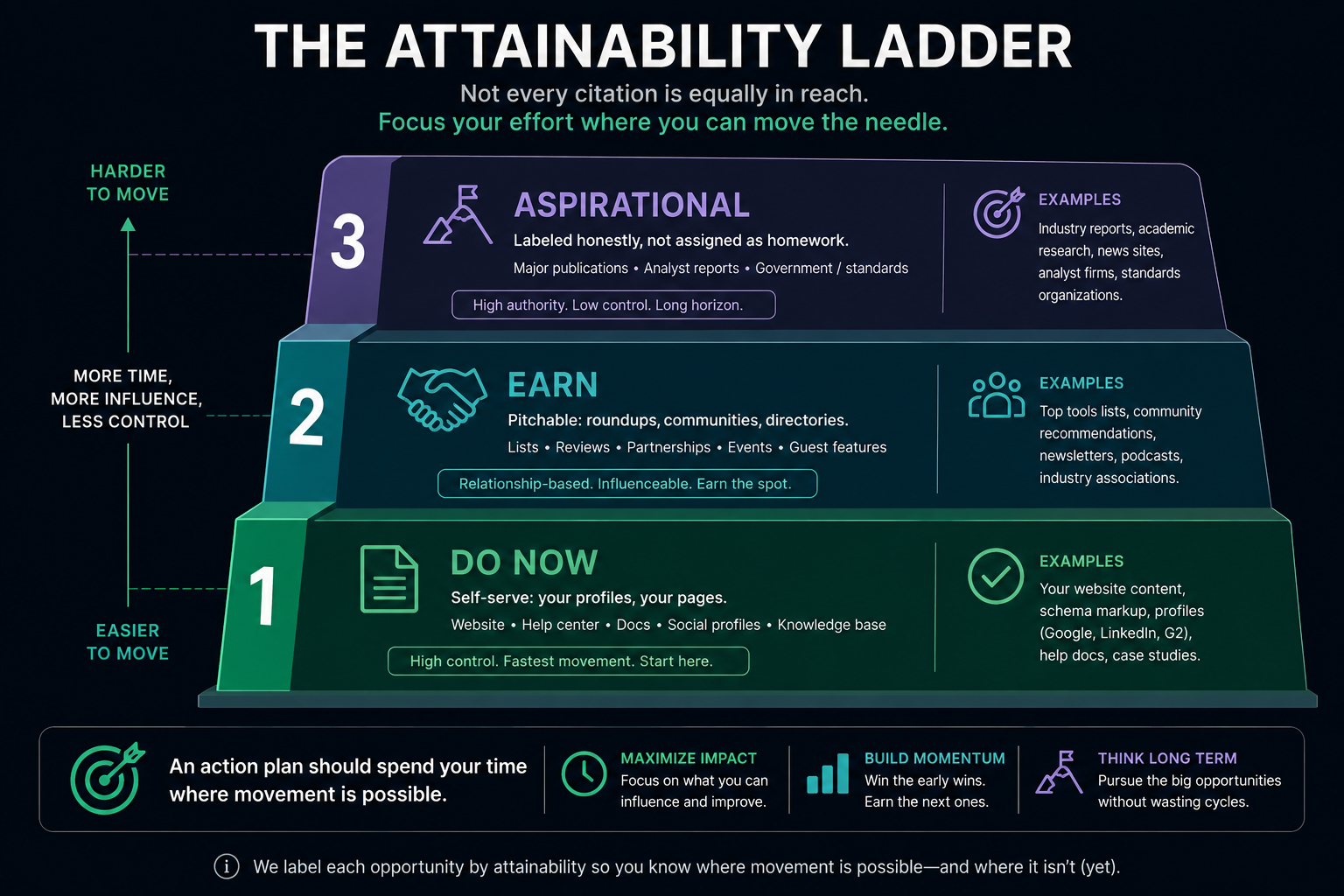
You walk away with a plain-English scorecard, the full set of stored transcripts, and an action plan: the structural code fixes, the exact questions to turn into content, and a source list sorted by how attainable each one actually is — because not every citation is equally in reach, and your time should go where movement is possible.
What we deliberately don't do
No guarantees — we report what the engines did, not what they will do next, which is why every number carries a sample size and a confidence level instead of a promise. No invented numbers — every rating, count, or percentage comes from a stored record, and the tool will not paste a statistic onto your site that is not already on your page. And no gray-hat shortcuts — no cloaking, no borrowed-authority seeding. We measure honestly and hand you fixes you can stand behind.
Fix, then prove
Two instruments, one loop. The AEO Score asks is your site built to be cited? — the inside-out readiness measure, with the fixes to raise it. The Citation Sweep asks are you actually cited? — the outside-in proof from the engines themselves. Fix with the Score; prove with the Sweep; re-sweep monthly to watch the gap between them close.
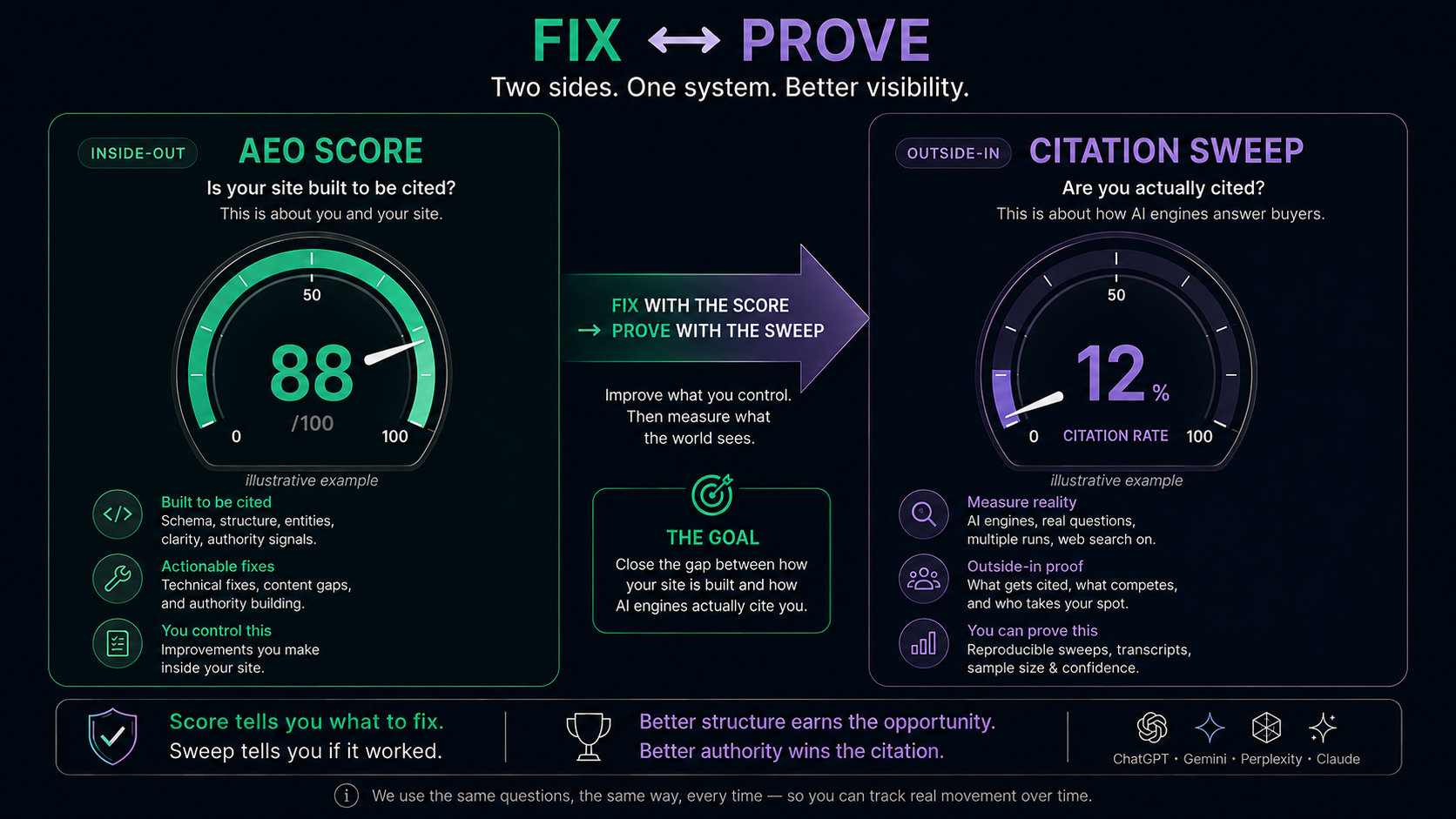
Diagram example answers, grid values, and gauge readings are illustrative — labeled as such — not measured results. AEO Analyzers (aeoanalyzers.com) was created and is solely maintained by Lindsay Hiebert, founder of PI GenAI LLC. It is unaffiliated with any similarly named browser extension, plugin, or tool.