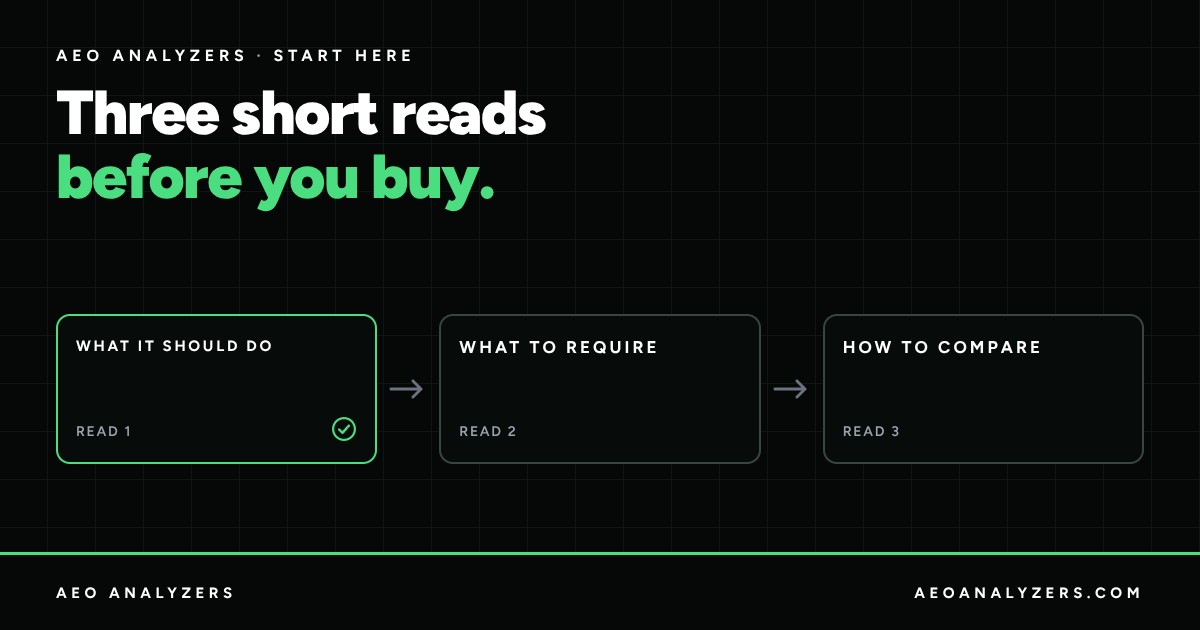
The AEO Buyer’s Guide: three short reads
Three short reads: what an AEO tool should do, what to require before you buy, and how to compare the market. Six minutes, each linking to the full guide.
Read the piece →Short, grounded pieces on answer-engine visibility — what AI assistants cite, why, and how to win the answer. Sample figures are always labeled, and every number is meant to be reproducible.
Want to check your own site first? Try the Free AEO Checker.
Three short reads: what an AEO tool should do, what to require before you buy, and how to compare the market. Six minutes, each linking to the full guide.
Read the piece →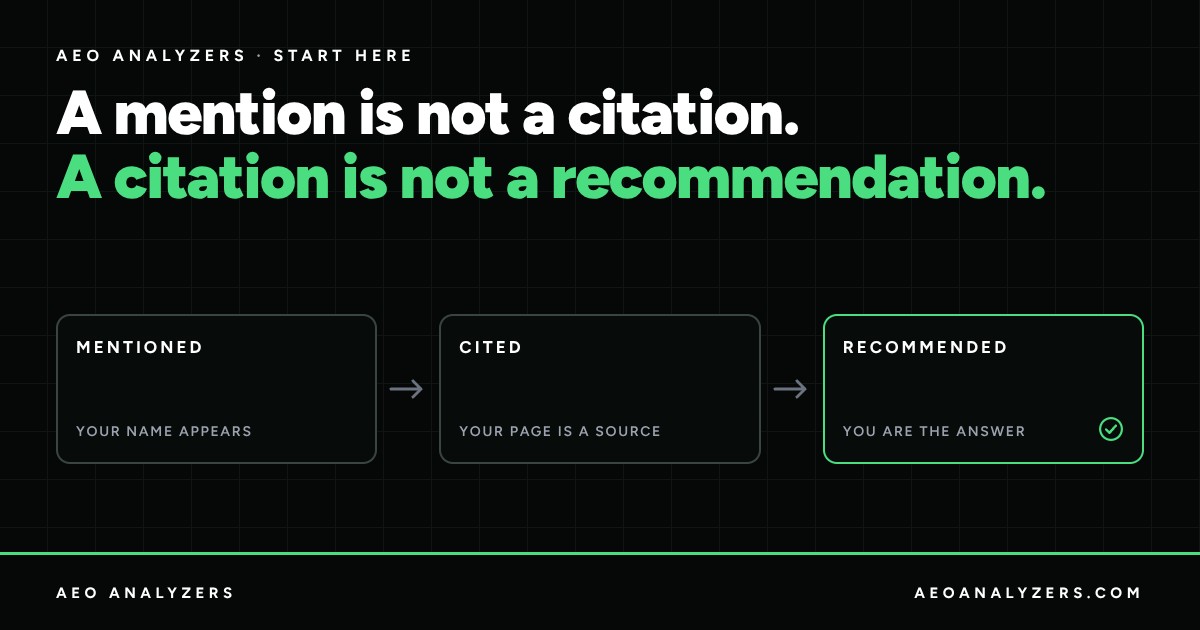
AI visibility is six different outcomes. A mention is not a citation, a citation is not a recommendation. What the four kinds of AEO software actually answer.
Read the piece →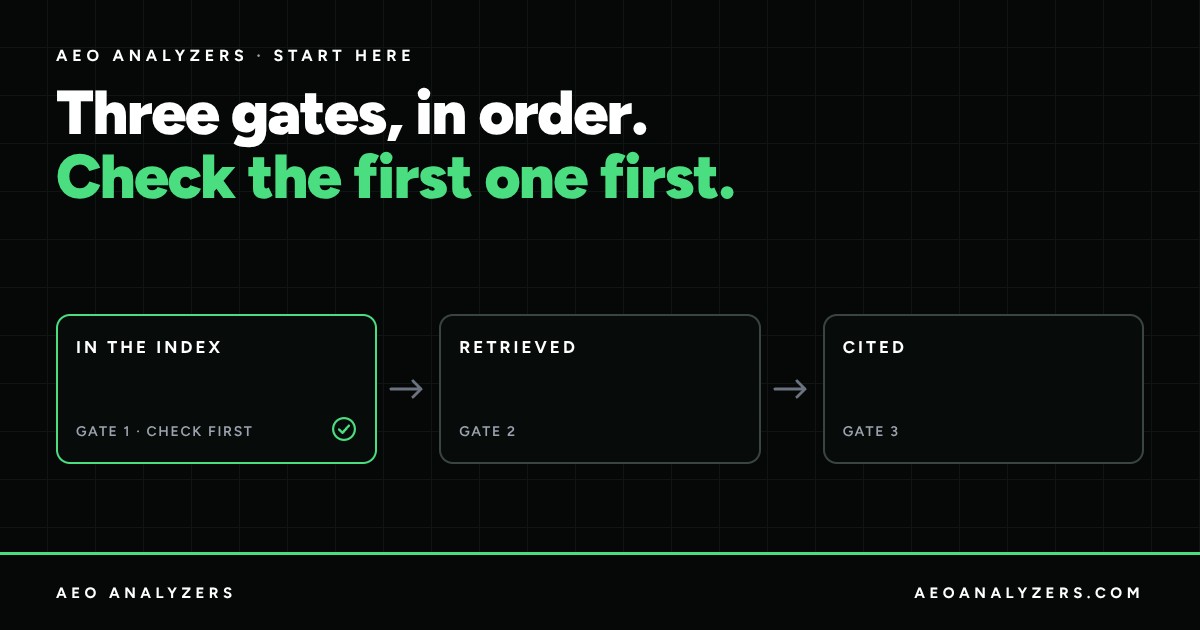
Three gates in order — in the index, retrieved, cited — and why most advice aims at the third while most sites fail the first. Free checks included.
Read the piece →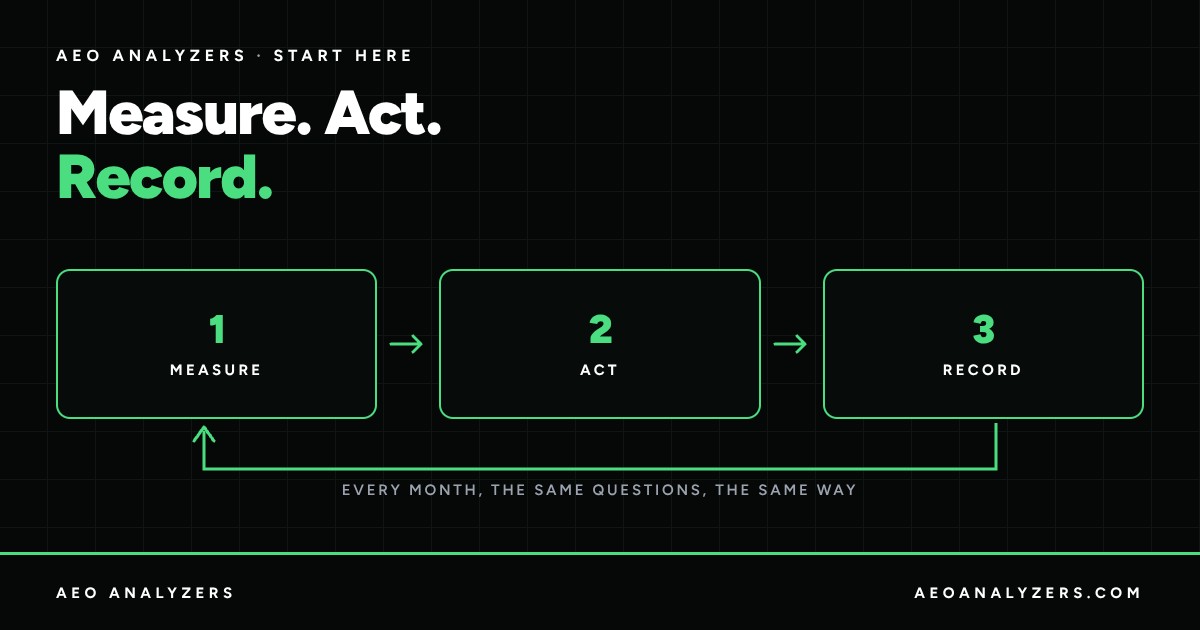
When buyers ask an AI engine for a recommendation, the engine mostly repeats the independent pages it reads. Measure. Act. Record.
Read the piece →Step-by-step and answer-first pages. All of them on one page: How to guides.
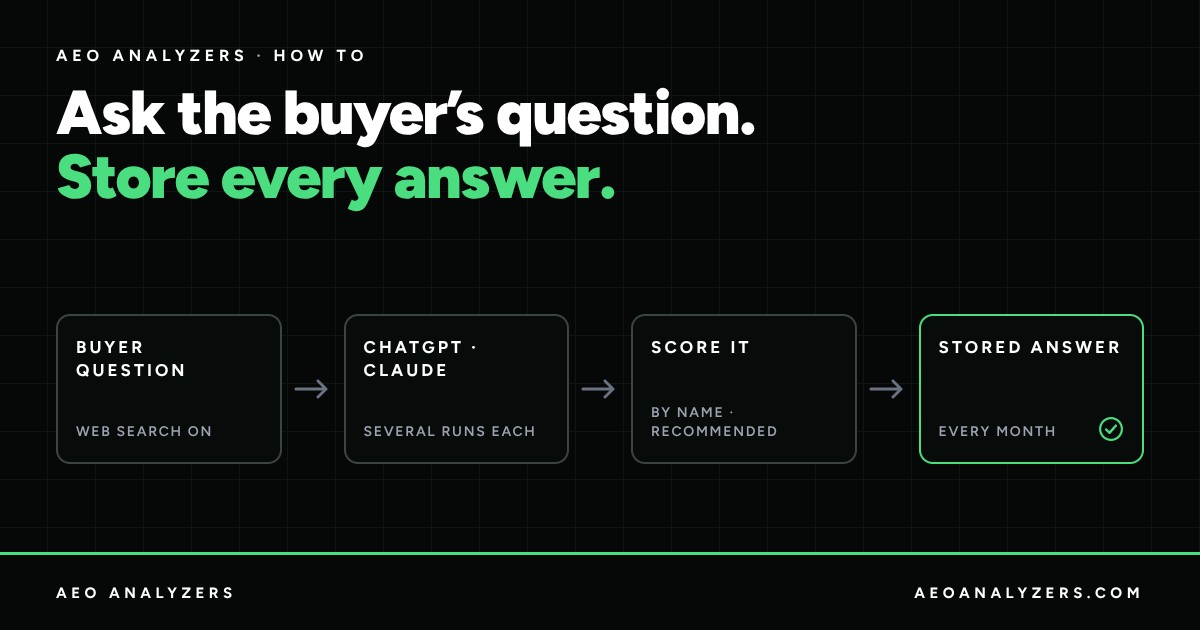
Ask the questions buyers ask, with web search on, five times each. Score found by name versus recommended (and accuracy) separately, every month.
Read the piece →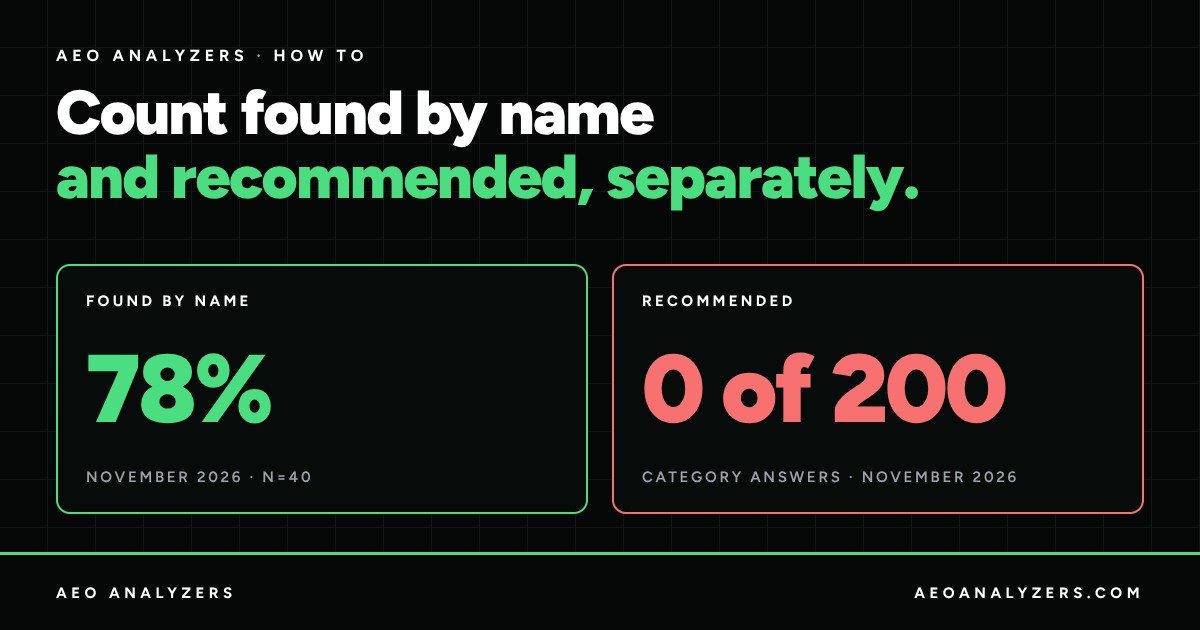
Track found by name versus recommended in AI answer engines, per engine and per month, with every answer stored. What to count, how to read it.
Read the piece →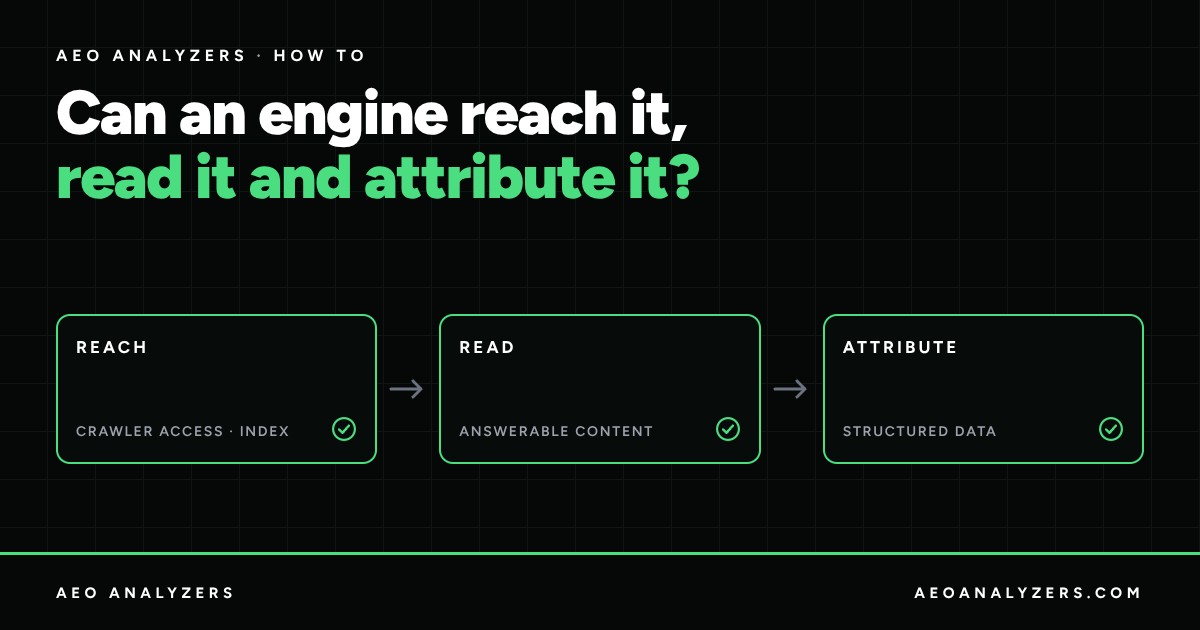
Yes. An answer engine readiness score checks crawler access, index coverage, structured data and answerable content. What it measures, and what it does not.
Read the piece →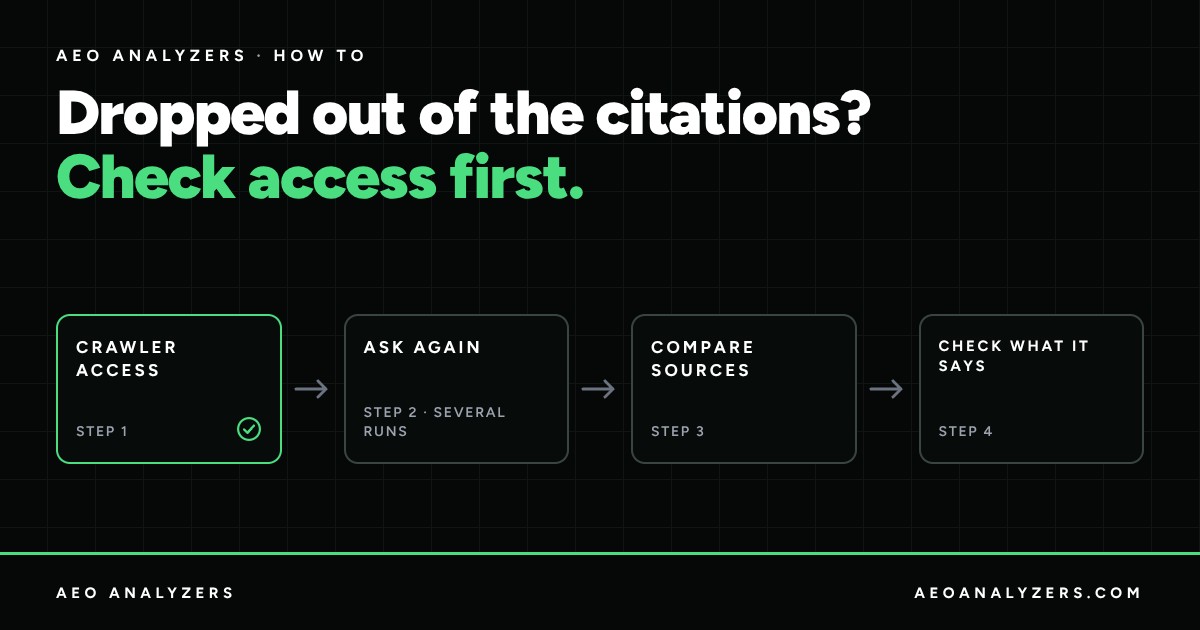
Check crawler access first, then ask the same questions again with several runs, compare the sources Perplexity cites now, and check what it says about you.
Read the piece →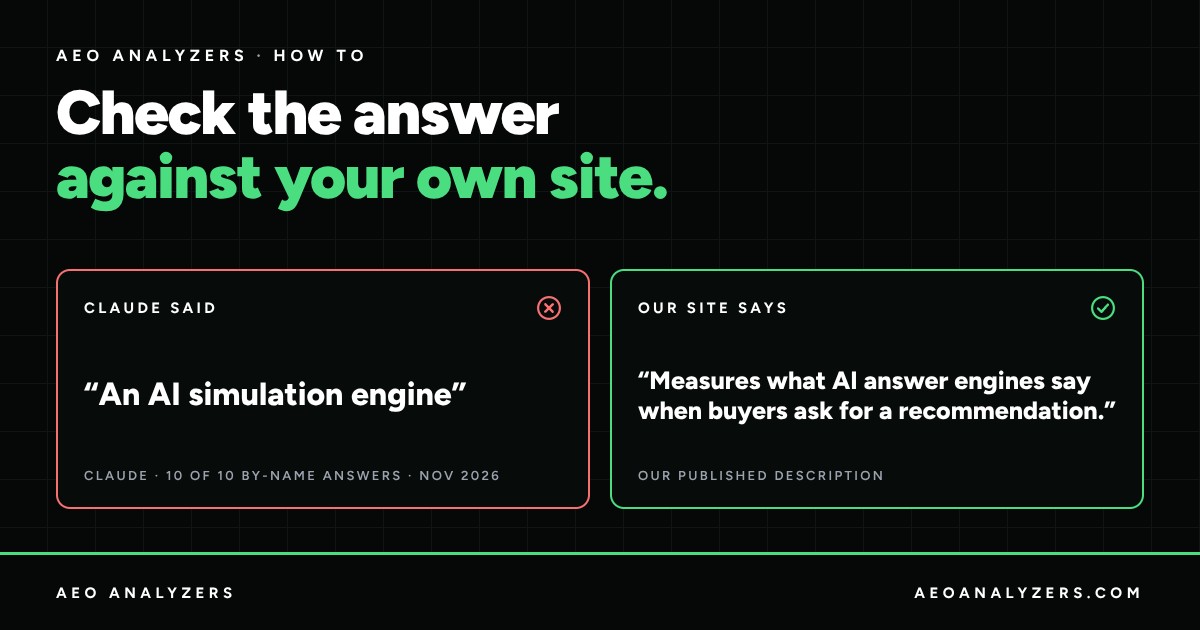
A useful tool asks the engines about you by name, checks each answer against your own published facts, and shows the exact wording and the source behind it.
Read the piece →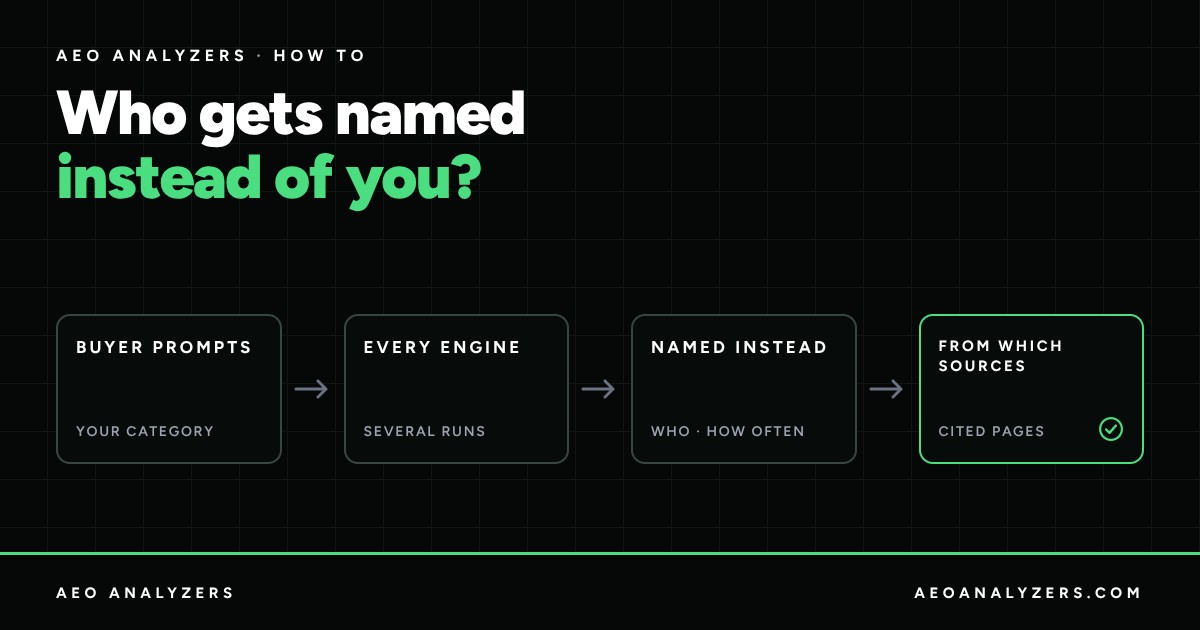
Run your buyers' prompts on each engine, several times, and record who gets named instead of you, how often and from which sources. What a tool must do.
Read the piece →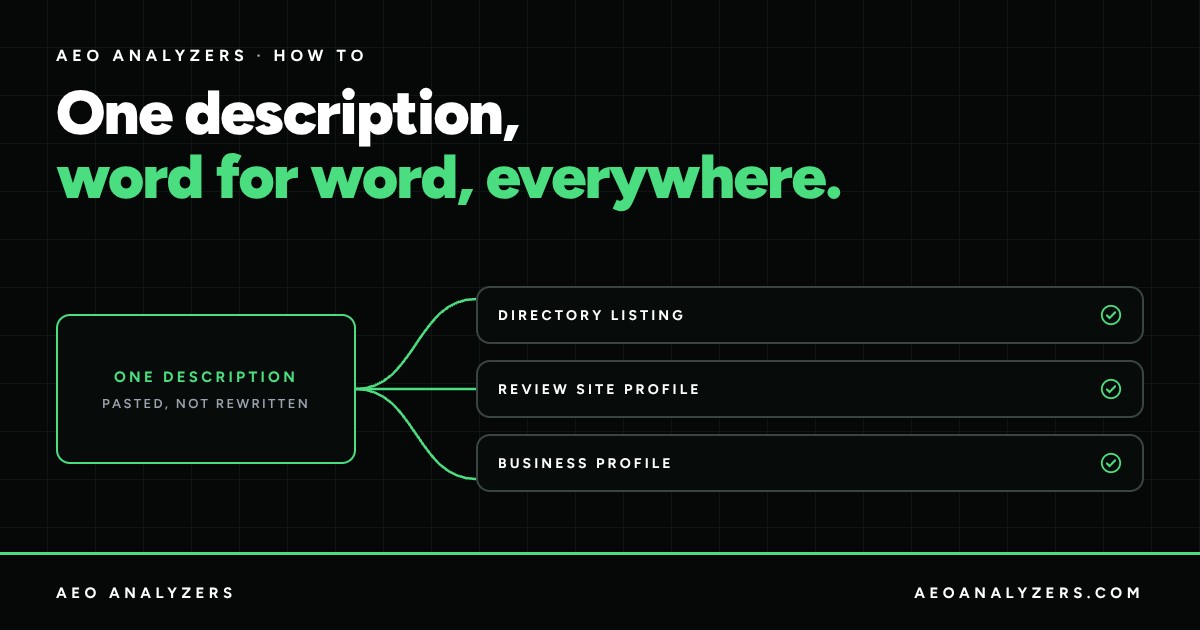
Free step-by-step guide: one description pasted word for word on the directories answer engines read, with where to start and when each listing is done.
Read the piece →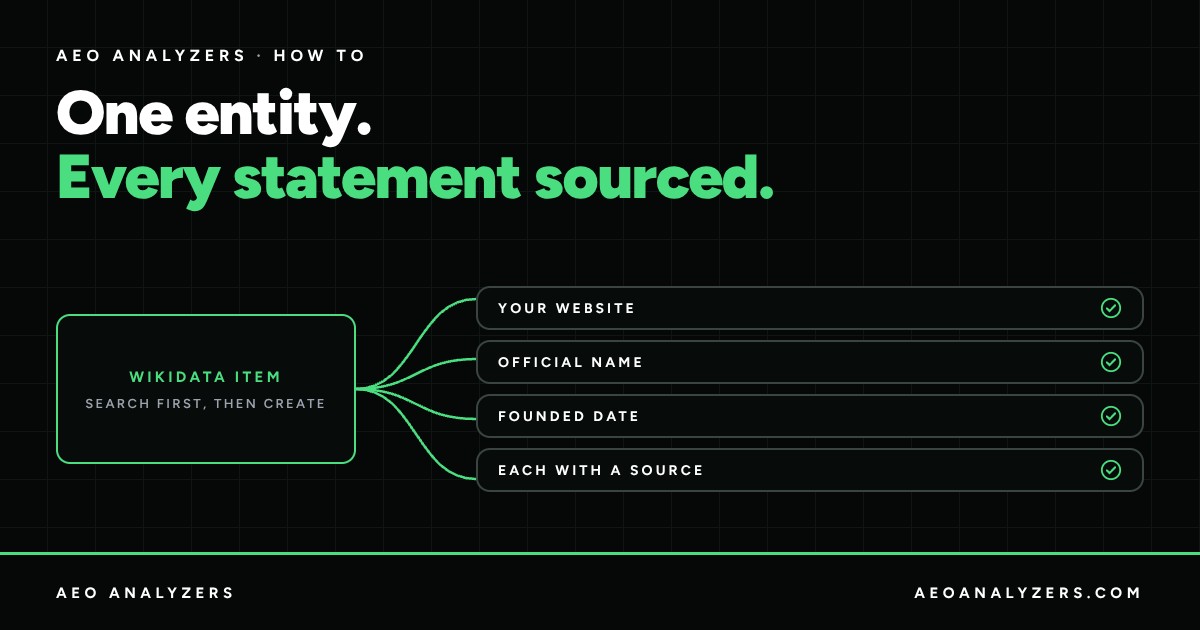
Free step-by-step guide to a Wikidata entry for your company and product: search first, create the item, add each statement with a source.
Read the piece →The Honest-Zero ledger · November 2026
We re-measure our own answer-engine visibility every month, the same way, and publish it whatever it says.
See the ledger →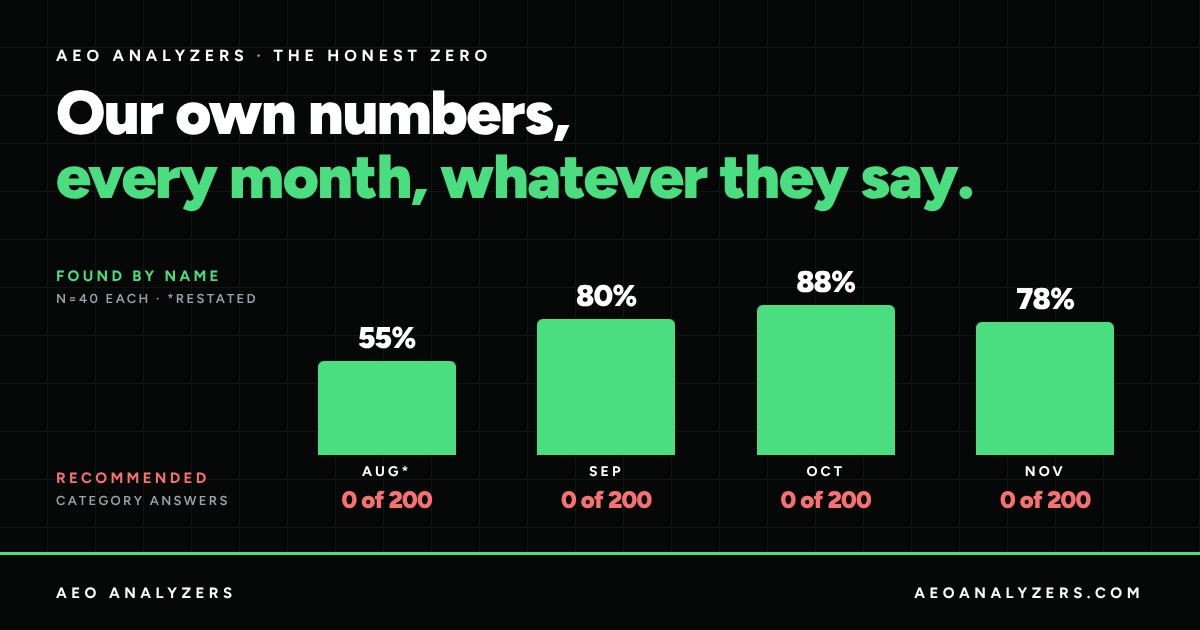
Our answer-engine visibility, re-measured every month the same way and published whatever it says: found by name, recommended to buyers, N on every figure.
Read the piece →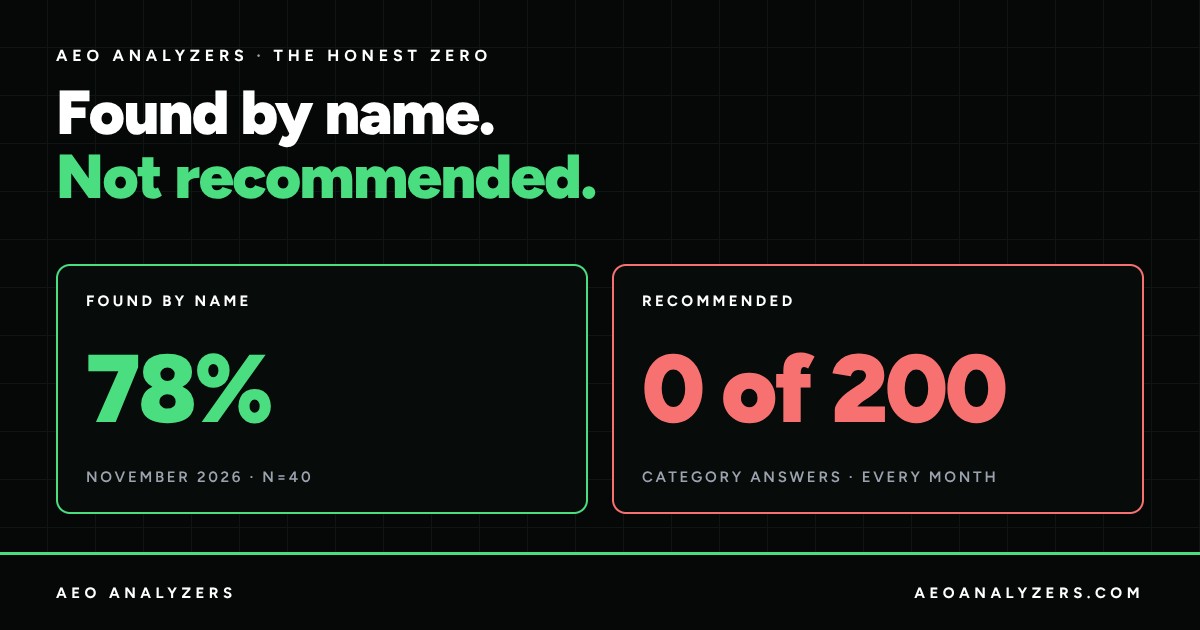
Four months of our own numbers: found by name rose from 55% to 78%; recommended to category buyers in 0 of 800 answers. Where the work is now.
Read the piece →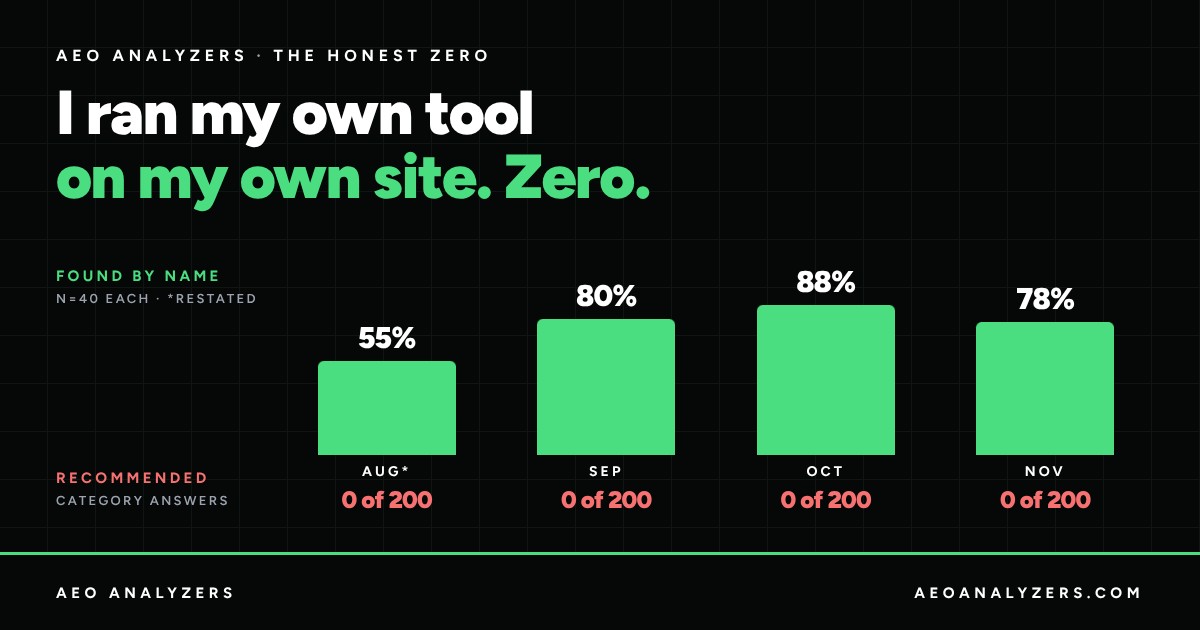
Found by name versus recommended to buyers: the measured zero, what it means, and the monthly ledger that tracks whether it moves.
Read the piece →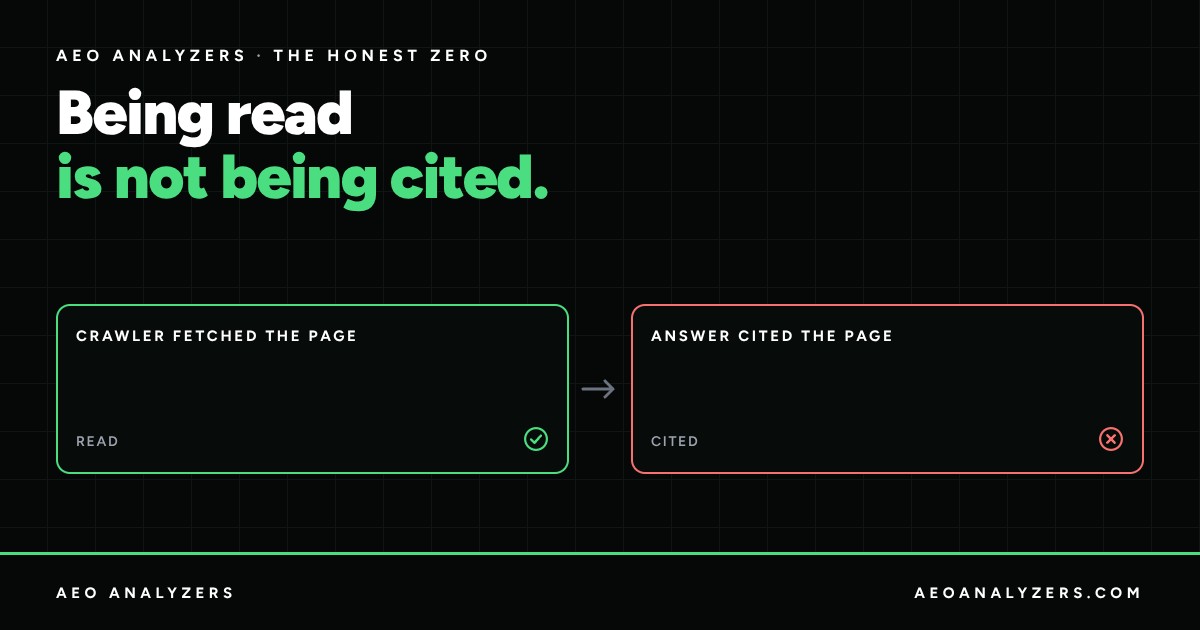
AI crawlers fetched my pages and cited them zero times. Why being read is not being cited, and why more content was never going to fix it.
Read the piece →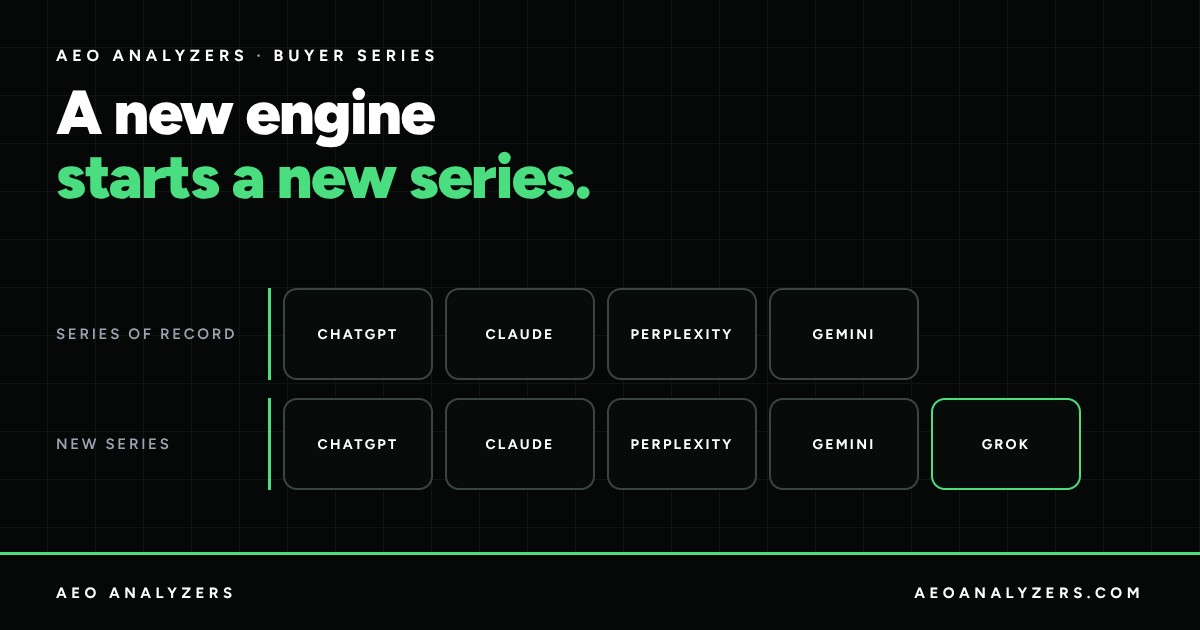
Pro and Business Citation Sweeps now ask Grok as well. Why a new engine starts a new series, which engines we leave out and why, and what else changed.
Read the piece →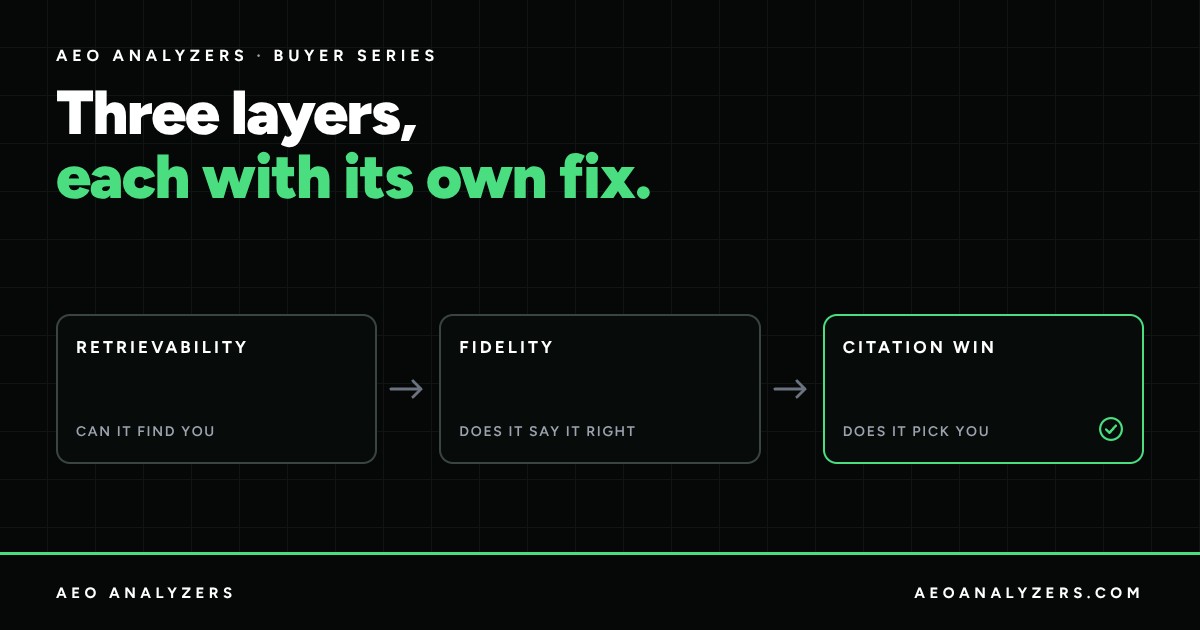
AI engines found us by name but did not recommend us in our category test. What a 14-point panel effect and 0.9 points of drift teach about AI visibility.
Read the piece →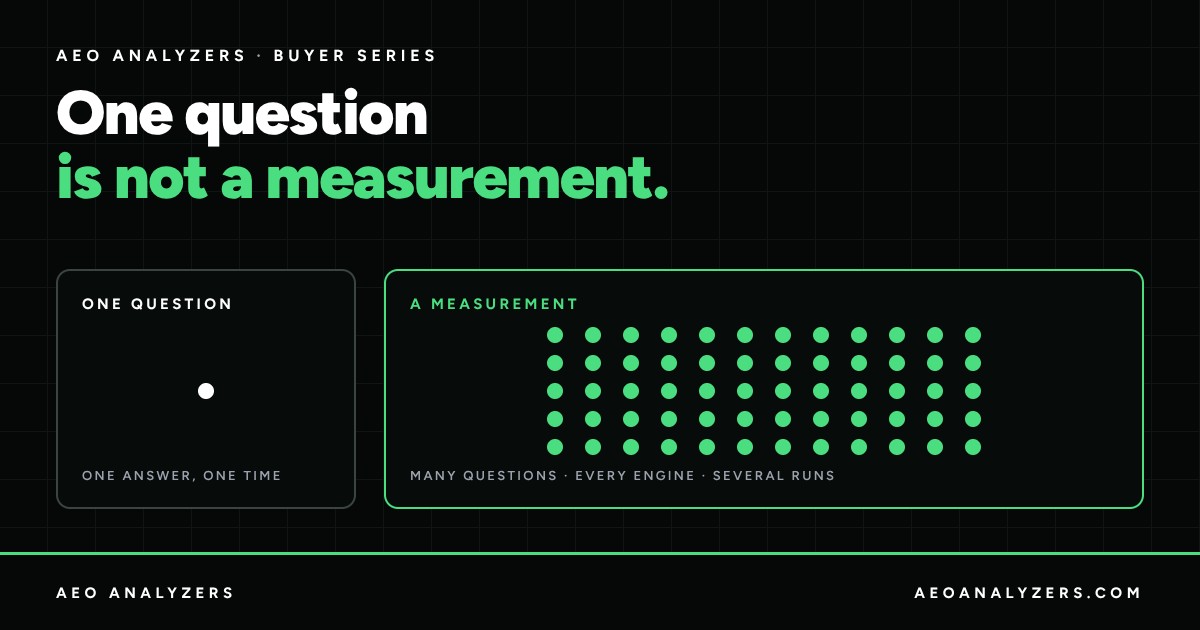
The one-minute AI visibility test tells you whether you win one question, not which questions you could win. Twelve questions on four engines produce a plan.
Read the piece →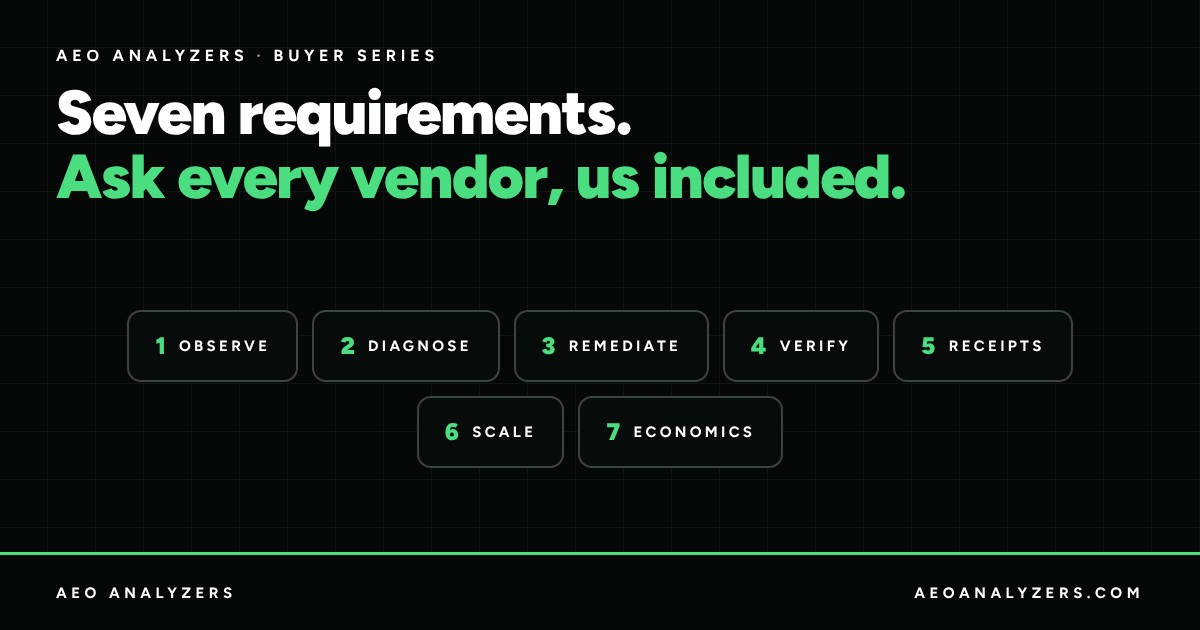
Purchasing requirements for answer engine optimization software. Seven requirements and thirteen questions to put to any AEO vendor - including us.
Read the piece →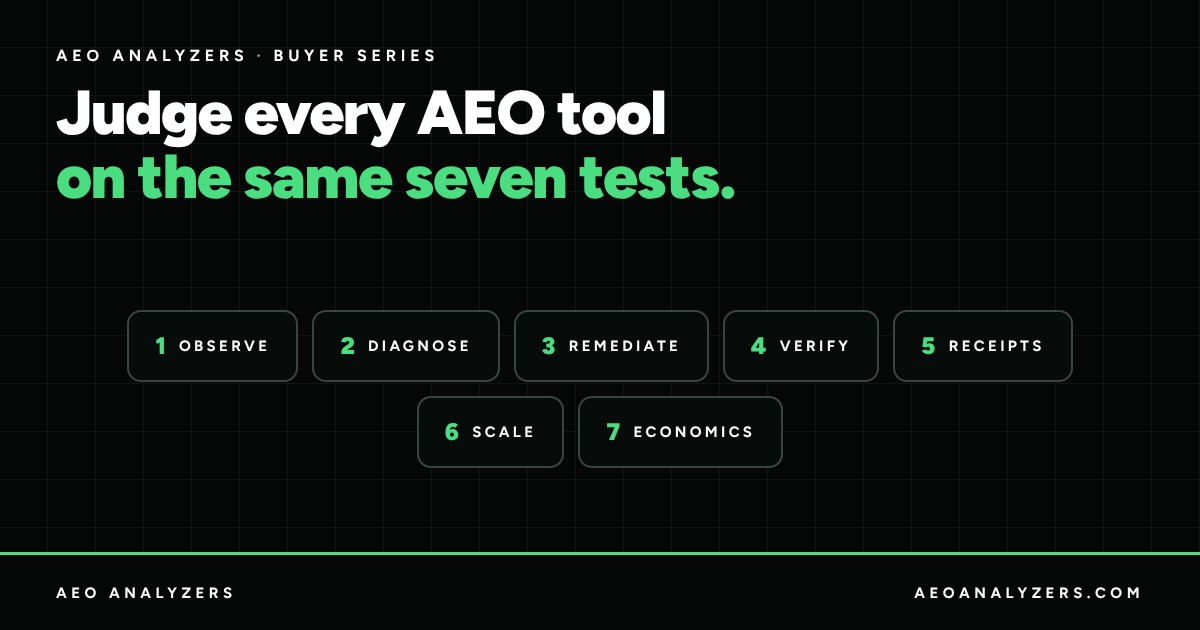
A dated, sourced comparison of AEO software judged on seven purchasing requirements. Every competitor fact links to the vendor's own page. No winner named.
Read the piece →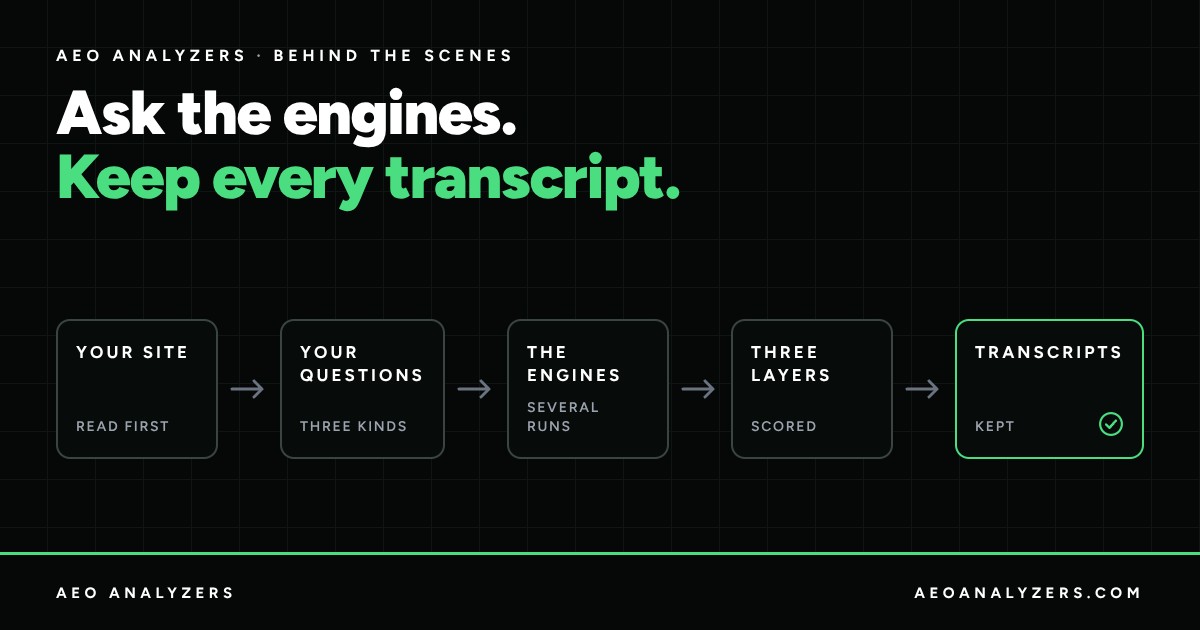
The pipeline, drawn: read your site, ask five answer engines on Pro and Business (four on the Day Pass), score three layers, keep every transcript.
Read the piece →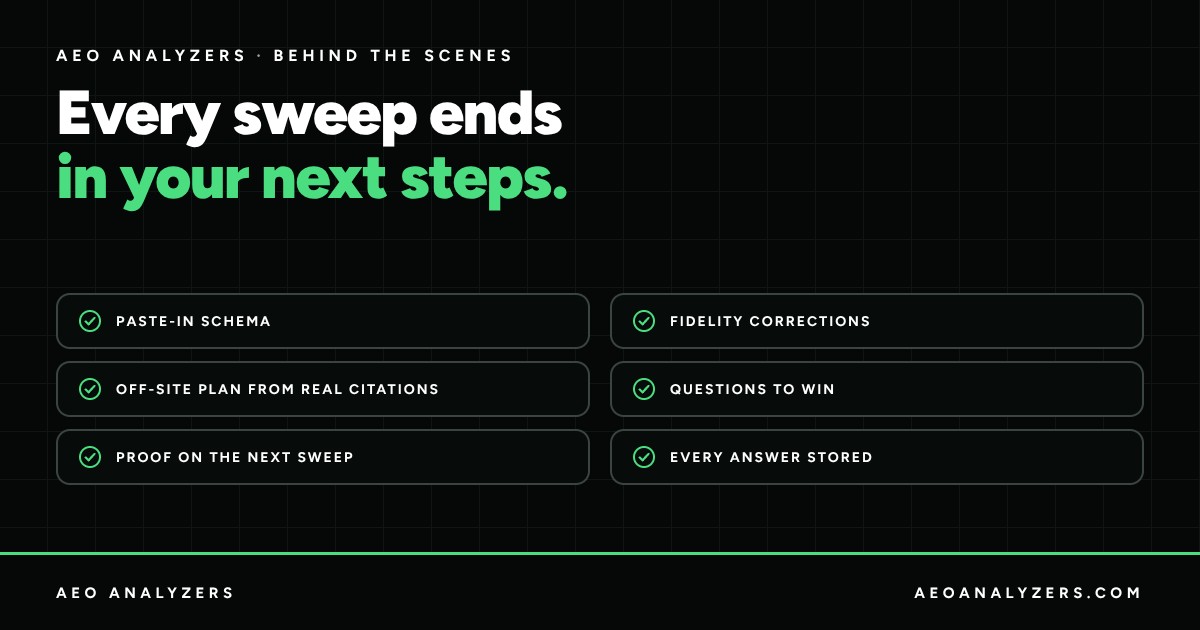
A sweep ends in a five-layer action plan: paste-in schema, fidelity corrections, an off-site plan from real citations, a battle-map, and proof.
Read the piece →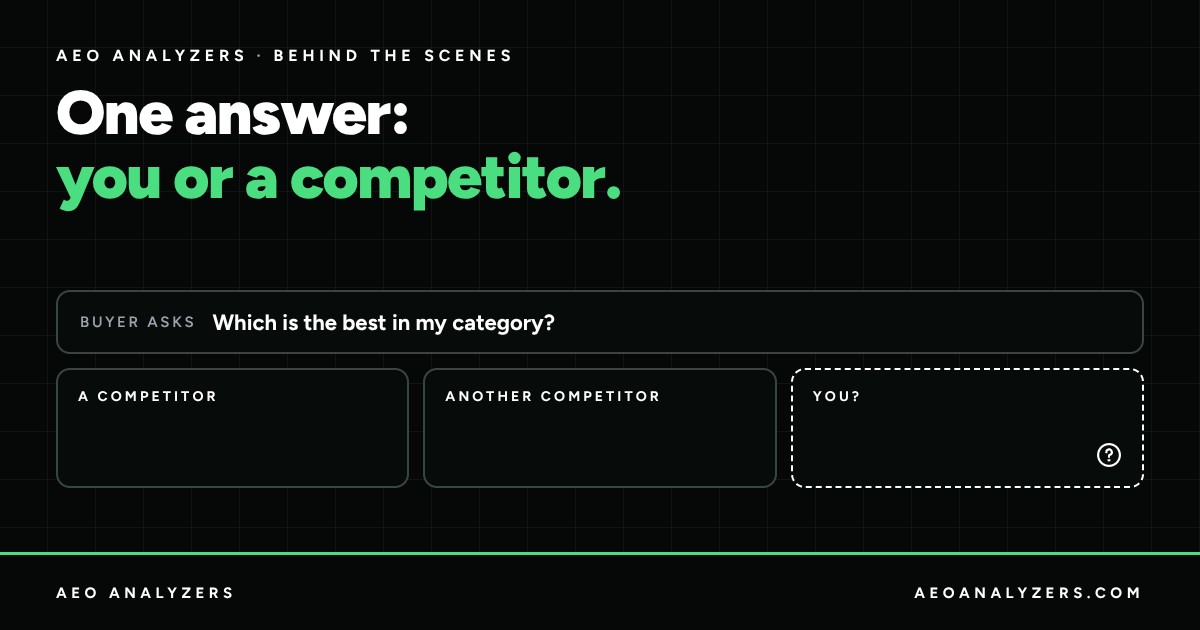
When buyers ask ChatGPT, Gemini or Perplexity for the best in your category, they get one answer: you or a competitor. A worked sample report; check yours free.
Read the piece →